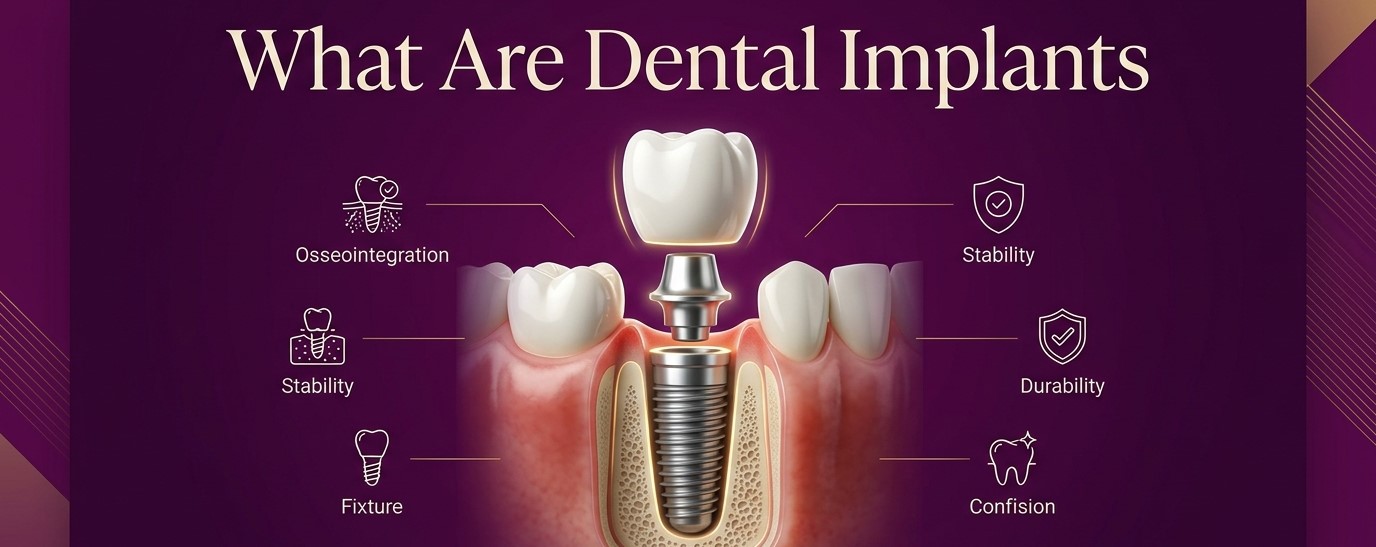
At the Lodge Causeway Dental Centre (LCDC), we understand that deciding to undergo oral surgery is a significant milestone. Our dedicated team of Lodge causeway Implant Dentists is committed to providing clinical excellence and total transparency. This comprehensive guide will explore the clinical science behind implants, detail the different Types of dental implants, outline the precise Dental implants procedure, and explain how our professionals deliver high-quality, efficient, and life-changing results for patients seeking dental implants in Bristol.
Tooth loss is a complex dental issue that extends far beyond aesthetics. When a tooth is lost, the underlying jawbone begins to deteriorate, facial structures can collapse, and the ability to chew and speak properly is compromised. In modern restorative dentistry, dental implants represent the pinnacle of tooth replacement technology. They are the only restorative and cosmetic dental treatment that preserves and stimulates natural bone, offering a permanent, structurally sound solution.
What Are Dental Implants? The Clinical Anatomy
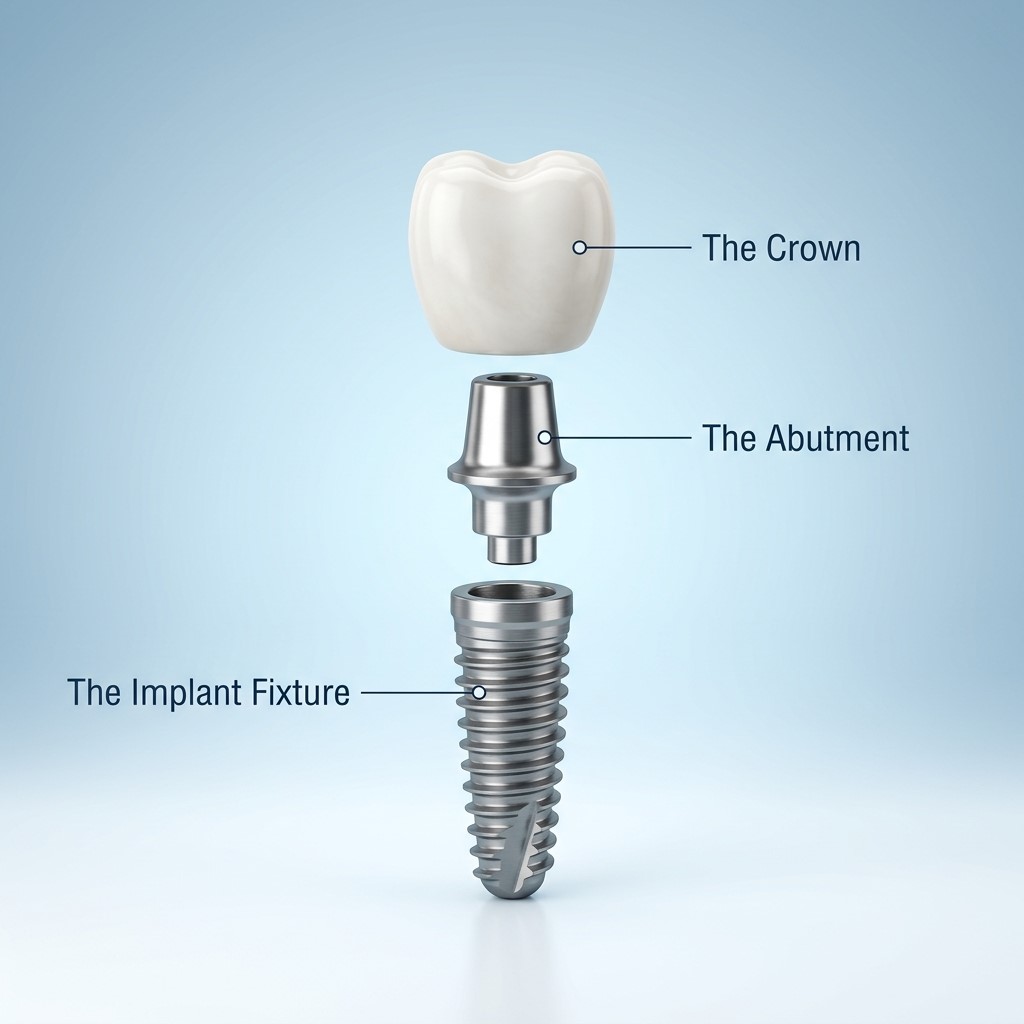
Unlike traditional dentures that sit on the gums or bridges that rely on adjacent teeth for support, dental implants are surgically anchored into the jawbone. A standard dental implant system consists of three distinct components:
The Implant Fixture (The Post): A small, screw-like post, typically fabricated from biocompatible titanium or titanium alloy. This is surgically placed into the alveolar bone (jawbone) and acts as an artificial tooth root.
The Abutment: A connector piece that is attached to the top of the implant fixture once it has fused with the bone. The abutment protrudes through the gum line and serves as the anchor for the final restoration.
The Prosthesis (The Crown, Bridge, or Denture): The custom-made artificial tooth or set of teeth that is secured to the abutment. This is the only visible part of the implant system and is colour-matched and shaped to blend seamlessly with your natural teeth.
The Science of Osseointegration
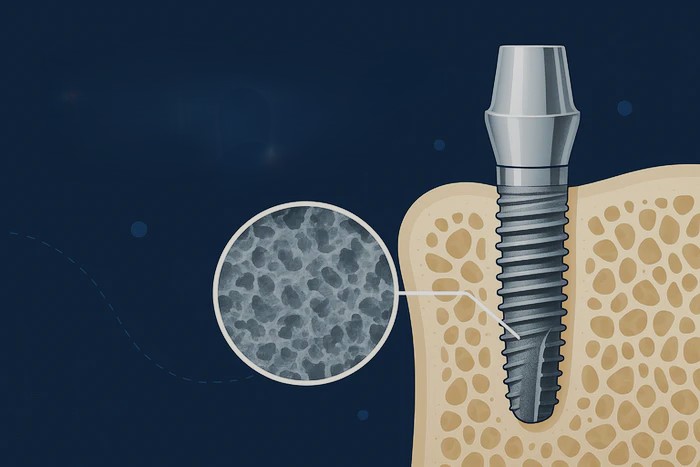
The clinical success of dental implants relies on a biological process known as osseointegration. Discovered in the 1950s, this is the structural and functional connection between living bone and the surface of a load-bearing artificial implant. Because titanium is highly biocompatible, the jawbone biologically recognizes the implant and grows directly around it, locking it firmly in place.
From a biomechanical perspective, implants restore proper masticatory (chewing) forces. If we consider the formula for pressure, P=F/A (where P is pressure, F is force, and A is the area), traditional dentures place all the masticatory force onto the small surface area of the gums, leading to discomfort and bone resorption. Dental implants, however, transfer the force (F) directly into the bone, mimicking the biomechanics of natural teeth.
Osseointegration &
Dental Implants
Types of Dental Implants and Their Clinical Applications
Every patient’s dental anatomy is unique. Therefore, the application of clear aligners or implants must be bespoke. Depending on the volume of missing teeth and the density of the patient’s jawbone, our dental implant specialists will recommend specific configurations.
Single Tooth Implant
For patients missing one tooth, a single tooth implant is the undisputed gold standard of care.
- Application: It replaces the missing tooth entirely independently, without requiring the drilling or alteration of healthy adjacent teeth (as is required for a traditional dental bridge).
- Aesthetic & Function: A single implant with a custom ceramic crown looks, feels, and functions exactly like a natural tooth.
Implant-Supported Bridges
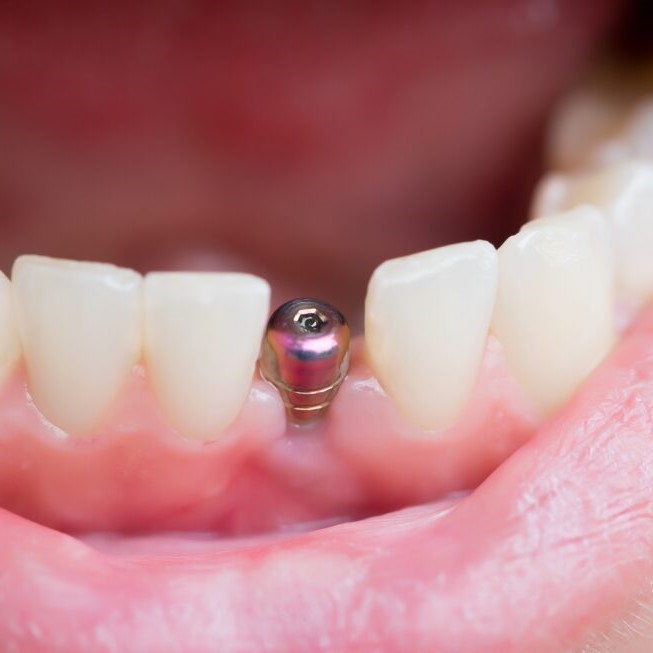
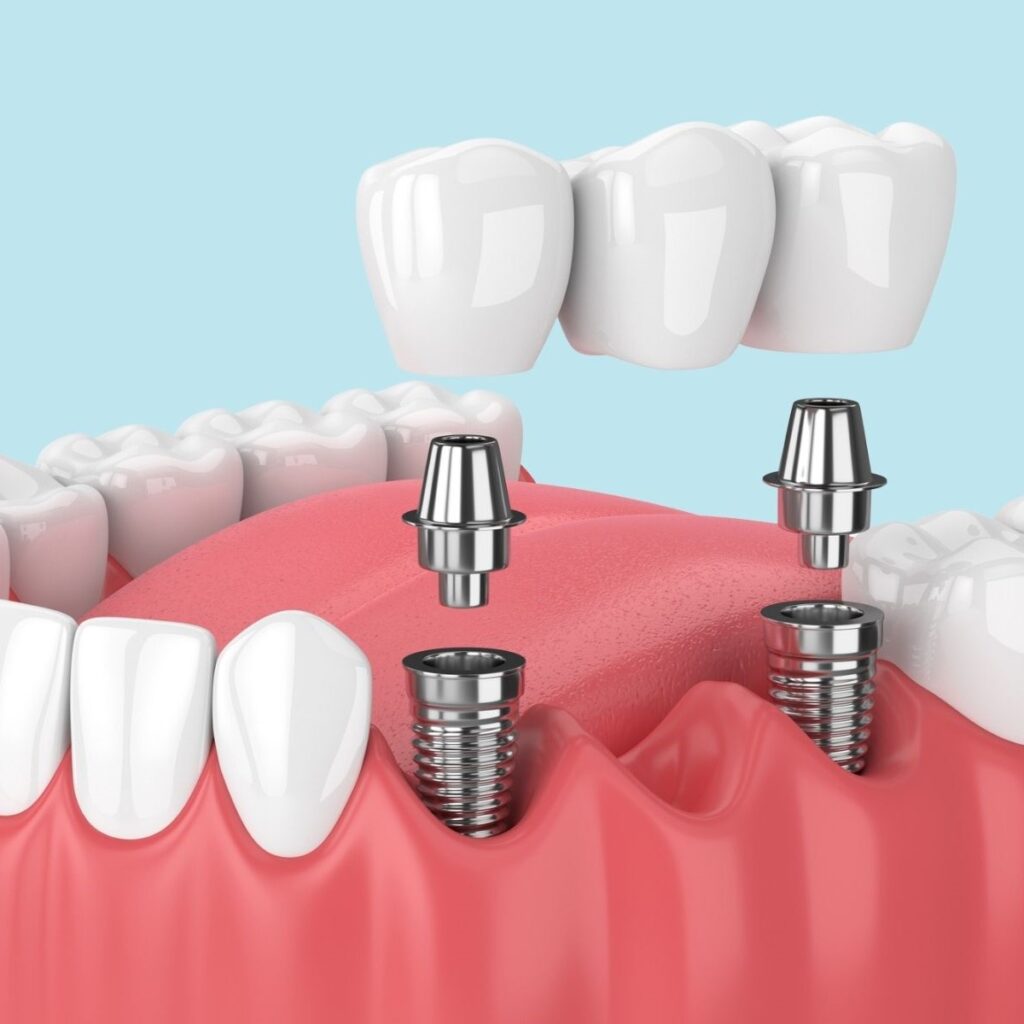
When a patient is missing two or more consecutive teeth, an implant-supported bridge is utilized.
- Application: Instead of placing an individual implant for every single missing tooth, two implants can be strategically placed at either end of the gap to support a multi-tooth bridge.
- Advantage: This is highly efficient, reduces the amount of surgery required, and provides immense stability for chewing.
All-on-4® Dental Implants
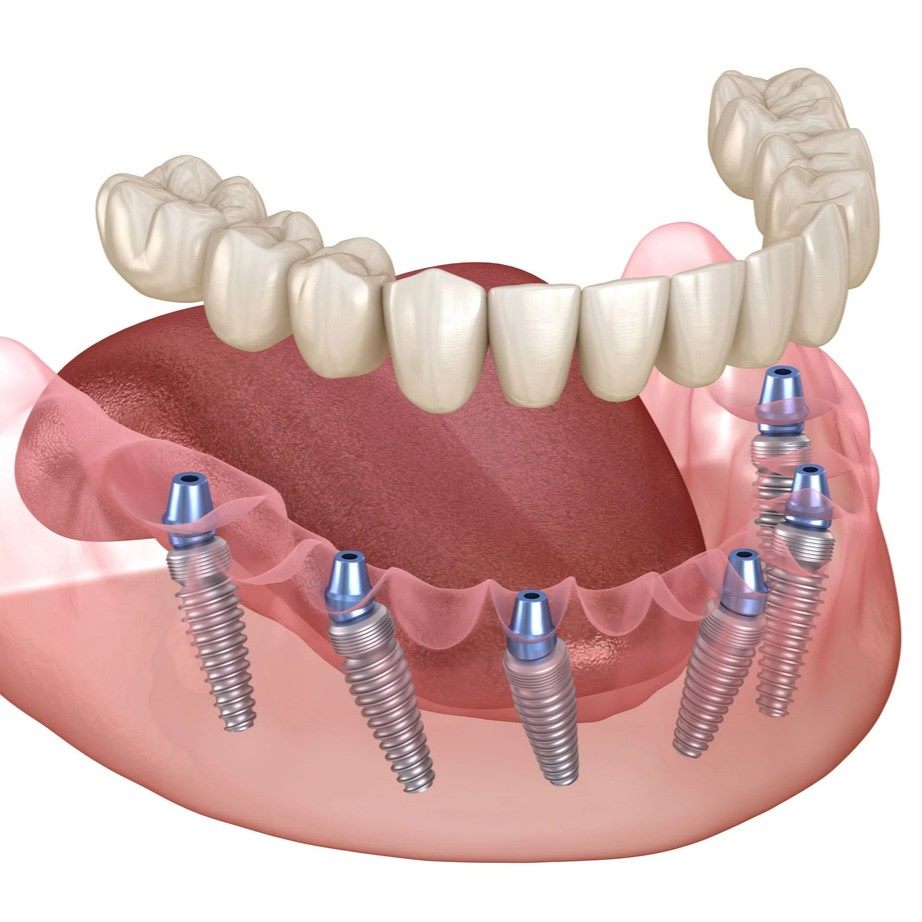
The All on 4 dental implants technique is a revolutionary, scientifically backed protocol designed for patients requiring full mouth restoration,
- Application: This technique uses just four highly specialized implants per arch. The two posterior (back) implants are tilted at a 45-degree angle.
- Advantage: This angulation maximizes the use of existing bone, often eliminating the need for complex and time-consuming bone grafting procedures.
The Dental Implants Procedure: A Step-by-Step Clinical Journey at LCDC
Step 1: Comprehensive Diagnostics and 3D CBCT Scanning
uccess begins with precise planning. As a leading implant dentist in Bristol, we utilize 3D Cone Beam Computed Tomography (CBCT) scanning. This provides a three-dimensional view of your jawbone density, nerve pathways, and sinus cavities. This digital mapping allows us to plan the exact angulation, depth, and size of the implant with sub-millimeter accuracy before surgery even begins.
Step 2: Preparatory Procedures (If Required)
If the CBCT scan reveals severe bone atrophy (thinning), the jawbone may not be strong enough to support an implant. In such cases, procedures like bone grafting or a sinus lift will be performed to rebuild the foundation. This added bone must heal and solidify before implants can be placed.
Step 3: Surgical Placement
Under local anaesthesia (with sedation options available for anxious patients), the implant fixture is surgically placed into the precise, pre-planned location within the jawbone. The gums are then sutured closed to protect the site. Our experts perform this oral surgery with advanced precision to minimize trauma to surrounding tissues.
Step 4: The Healing Phase (Osseointegration)
This is a critical waiting period. Over the next 3 to 6 months, the jawbone will biologically fuse with the titanium implant. During this time, patients are provided with a temporary aesthetic prosthesis so they are never without a smile.
Step 5: Abutment and Final Restoration Placement
Once osseointegration is confirmed, a minor procedure is performed to attach the abutment to the implant. Finally, your custom-fabricated crown, bridge, or full arch denture is permanently affixed. At LCDC, our restorative team ensures the bite alignment is perfect and the aesthetic result is indistinguishable from natural dentition.

Understanding Dental Implants Side Effects and Risks
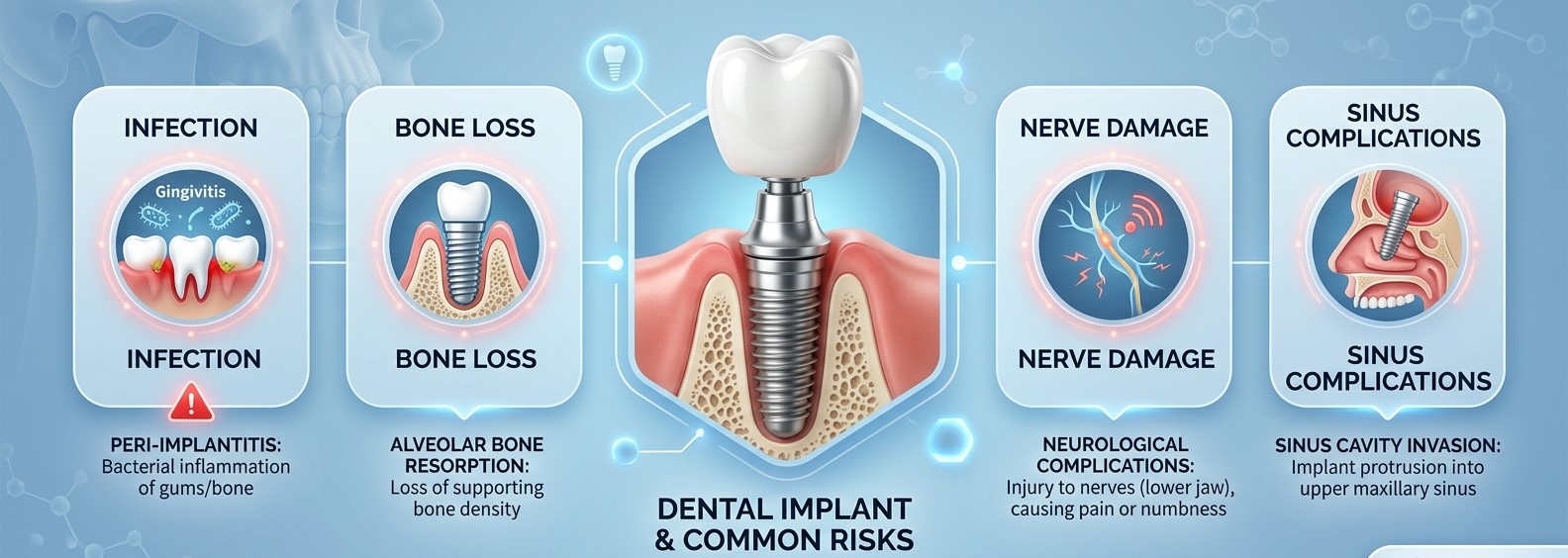
As with any minor surgical procedure, transparency regarding potential risks is a cornerstone of trusted clinical care. While the statistical success rate of dental implants is exceptionally high (often cited mathematically as S≥95%), patients should be aware of potential Dental implants side effects.
Standard Post-Operative Effects:
- Mild to moderate swelling of the gums and face.
- Minor bruising of the skin and gums.
- Discomfort at the implant site (manageable with prescribed or over-the-counter analgesics).
- Minor bleeding.
Rare but Serious Complications:
- Peri-implantitis: An infectious disease that causes inflammation of the gum and bone structure around a dental implant. Chronic poor oral hygiene or heavy smoking significantly increases this risk.
- Nerve Damage: Extremely rare due to our use of 3D CBCT scanning, but if an implant is placed too close to a nerve, it can cause tingling or numbness in the lips or chin.
- Implant Failure: In rare cases, osseointegration fails to occur, and the implant remains loose.
How LCDC Mitigates Risk:
At LCDC, our dental implant specialists strictly adhere to the highest cross-infection control standards. By utilizing 3D surgical guides, prioritizing comprehensive pre-surgical health screenings, and providing rigorous post-operative care instructions, we systematically reduce the risk of complications, ensuring a safe and predictable outcome for every patient.
Comparing Your Options: Implants vs. Traditional Solutions
To help potential patients make an informed decision, consider the clinical differences between implants and older restorative methods.
| Clinical Feature | Dental Implants | Traditional Dental Bridges | Removable Dentures |
|---|---|---|---|
| Bone Preservation | Yes. Stimulates jawbone to prevent deterioration. | No. Bone loss occurs beneath the missing tooth. | No. Actually accelerates bone loss due to pressure. |
| Impact on Adjacent Teeth | None. Completely self-supporting. | Requires shaving down healthy enamel on adjacent teeth. | None, or relies on clasps that can wear down adjacent teeth. |
| Lifespan | Can last a lifetime with proper care (20+ years). | Typically 7−15 years before replacement is needed. | Typically 5−10 years (requires frequent relining). |
| Masticatory Efficiency | Restores 80%−100% of natural chewing force. | Restores moderate chewing force. | Restores roughly 20%−25% of chewing force. |
| Maintenance | Brush and floss like natural teeth. | Requires special floss threaders. | Must be removed nightly for chemical soaking and cleaning. |
Why Choose LCDC for Your Dental Implants in Bristol?
When searching for Fishponds dental implants or a trusted provider in the wider Bristol area, the expertise of the clinical team is paramount.
At Lodge Causeway Dental Centre, we do not view implant dentistry merely as a mechanical procedure; we view it as the restoration of your quality of life.
Frequently Asked Questions (FAQs)
Reclaim Your Smile and Confidence at LCDC
Living with missing teeth or struggling with unstable dentures can severely impact your self-esteem, your diet, and your overall health. Dental implants offer a clinically proven, elegant, and permanent solution.
If you are researching dental implants in Bristol and wish to be treated by professionals who prioritize surgical precision, aesthetic excellence, and compassionate care, LCDC is here for you.
Don’t let tooth loss dictate your life. Contact Lodge Causeway Dental Centre today to schedule a comprehensive implant consultation and take the first step towards a complete, functional, and beautiful smile.