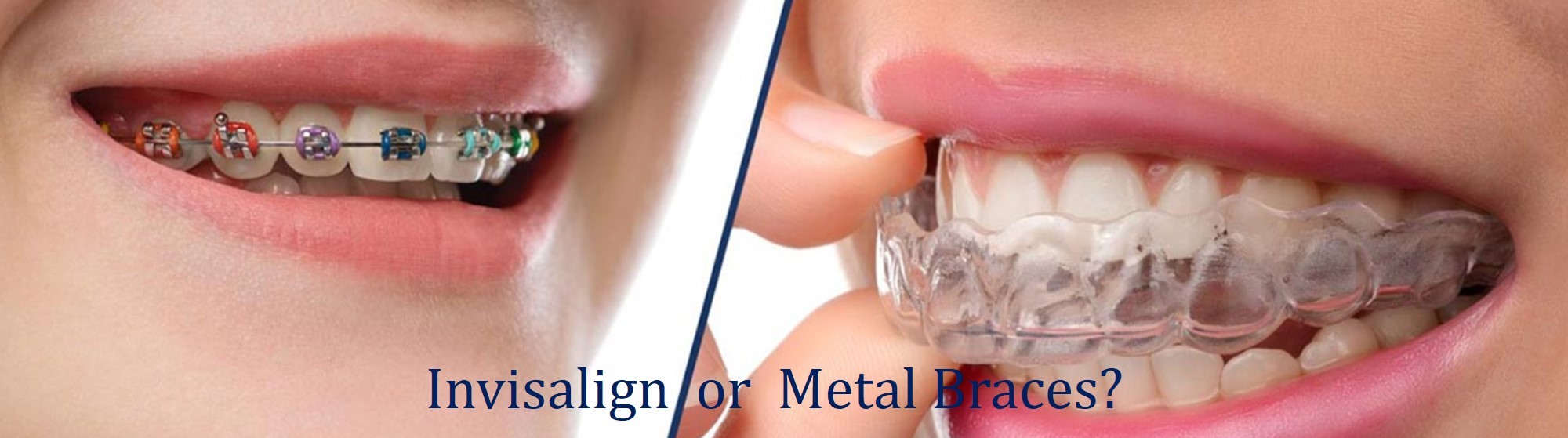
When patients visit Lodge Causeway Dental Centre, Our Bristol Practice, one of the most frequent questions we encounter regarding orthodontic treatment is: invisalign or braces? Deciding between invisalign aligners and traditional braces is a significant clinical and financial decision. Both modalities are highly effective at treating malocclusions, but they utilize vastly different biomechanical principles to achieve a straighter smile.
A Brief Description of Invisalign and Metal Braces
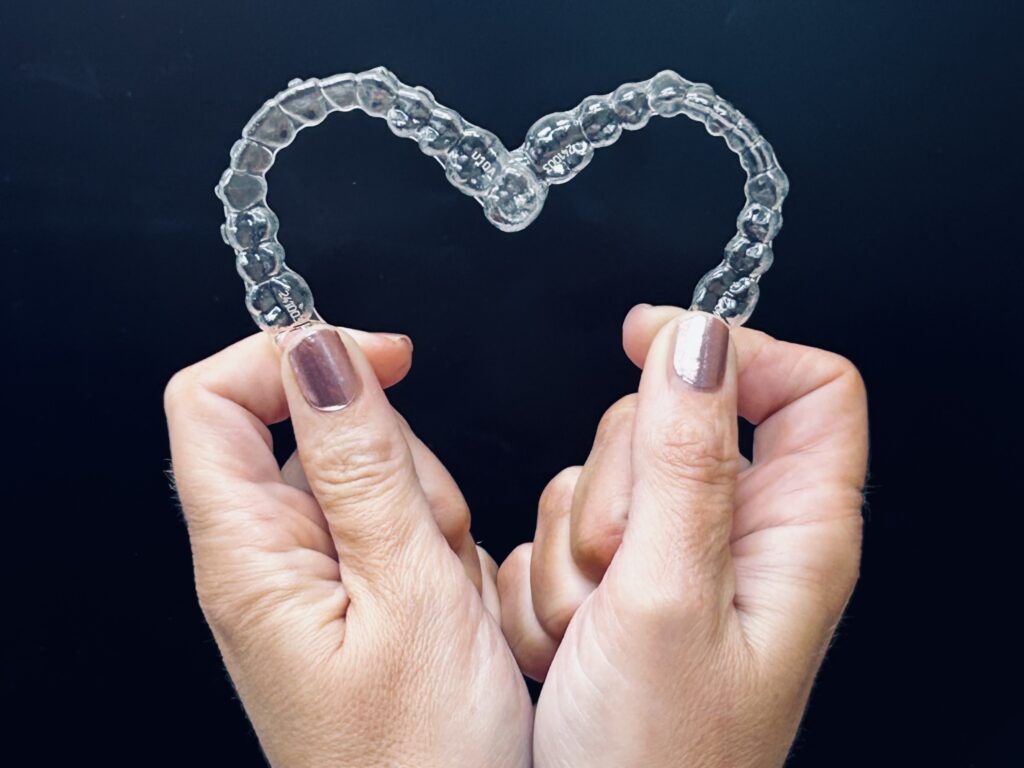
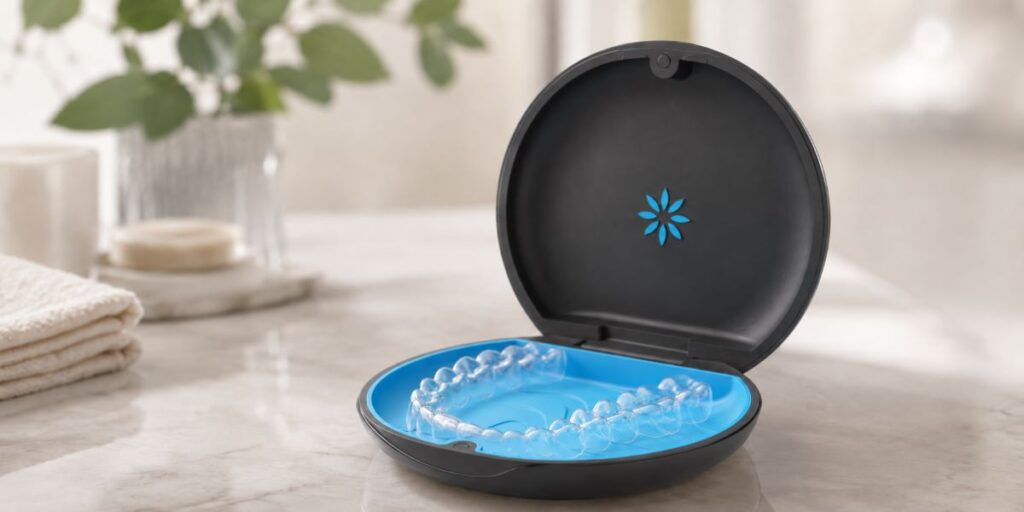
Invisalign utilizes advanced 3D digital scanning to fabricate a series of custom-made, clear polyurethane plastic trays. Rather than pulling teeth, invisalign clear aligners and metal braces differ in that aligners push teeth into place using carefully calculated force vectors. Patients wear each tray for 1 to 2 weeks, for a strictly mandated 20 to 22 hours per day.
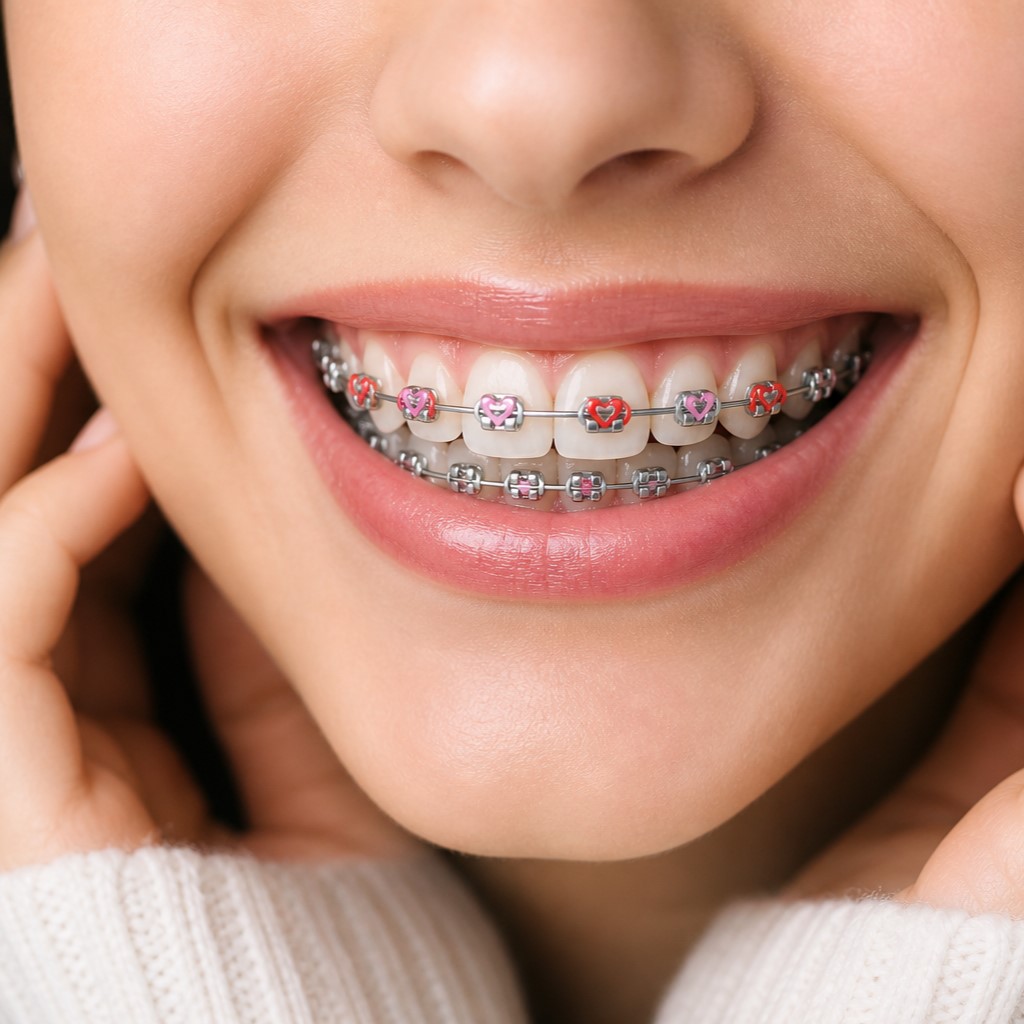
Fixed orthodontic appliances consist of metal brackets bonded directly to the enamel of each tooth, connected by a metal archwire. By periodically tightening or changing the wire, the dentist applies continuous biomechanical force to pull the teeth into alignment. They are permanently attached for the duration of the treatment.
Whether you are looking for invisalign in Bristol or invisalign Bristol dentist, this comprehensive guide will evaluate both treatments. Backed by recent clinical findings, we will explore everything from invisalign vs braces results to the daily realities of wear, helping you determine if invisalign is better than metal braces for your specific dental anatomy.
Invisalign vs Braces, Which is Cost-Effective?
When evaluating invisalign aligners vs braces costs, the answer heavily depends on the complexity of your clinical case. Historically, metal braces were significantly cheaper. However, advancements in digital orthodontics have narrowed the gap. For mild to moderate crowding, the invisalign clear aligners vs braces price is often very comparable.
Traditional Braces Costs
Typically cost-effective for highly complex cases that require years of treatment, as the hardware cost is relatively fixed.
Invisalign Aligners Costs
The price is often dictated by the number of trays required. Minor aesthetic corrections can actually be more cost-effective with clear aligners than with fixed braces.
If you are researching invisalign costs in Bristol, we highly recommend taking advantage of an invisalign free consultation at our clinic to get an accurate, personalized quote.
Is Invisalign Faster Than Braces for Teeth Straightening?
Treatment duration is a primary concern for patients. Is one method inherently faster?
Traditional Braces Treatment Duration
However, traditional braces are generally faster for complex, severe malocclusions (like severe rotations or significant vertical discrepancies). Furthermore, the speed of invisalign in Bristol relies on patient compliance. If aligners are worn for only hours a day instead of , treatment will stall, making fixed braces the “faster” option by default.
Invisalign Braces Treatment Duration
Clinical studies indicate that for mild to moderate spacing or crowding, Invisalign can sometimes achieve results faster—often in to months. The digital planning software (ClinCheck®) calculates the most efficient pathway for tooth movement, applying targeted force to specific teeth at specific times.
Comparing the Results and Effectiveness
Patients often ask about invisalign vs braces results. Both systems yield excellent clinical outcomes, but their effectiveness varies based on the specific orthodontic issue:
- Rotations and Extrusions: Metal braces excel at gripping cylindrical teeth (like premolars) and rotating them, or pulling a tooth downward (extrusion).
- Arch Expansion and Tipping: Clear aligners are highly effective at tipping teeth outward to broaden the dental arch and resolve crowding.
- Bite Correction: While Invisalign uses elastics to correct overbites and underbites (similar to braces), severe skeletal discrepancies often require the rigid control of fixed brackets and wires.
Issue
Rotation/Extrusion
Arch Expansion
Over/Underbite
Discrepancies
Metal Braces
Invisalign
For the majority of adult patients seeking aesthetic alignment, the results of clear aligners vs braces are practically indistinguishable upon completion.
Are Metal Braces Lasting More Than Clear Invisalign Braces?
A common misconception centers on longevity: is invisalign lasting more than braces, or vice versa?
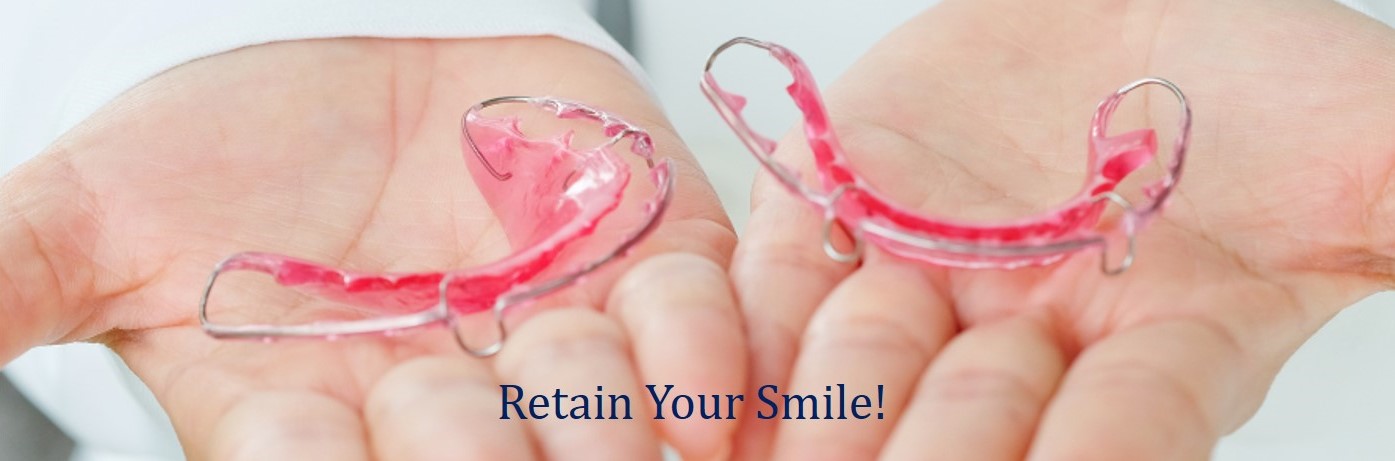
Invisalign vs Braces for Different Age Groups
The choice between invisalign or braces for different ages requires evaluating psychological maturity, lifestyle, and dental development.
Invisalign or Braces for Kids?
For early interceptive orthodontics (Phase 1 treatment, typically ages 7-10), traditional fixed appliances or palatal expanders are usually the standard of care. Children in mixed dentition (having both baby and adult teeth) often lack the compliance required for removable aligners, making fixed options more reliable.
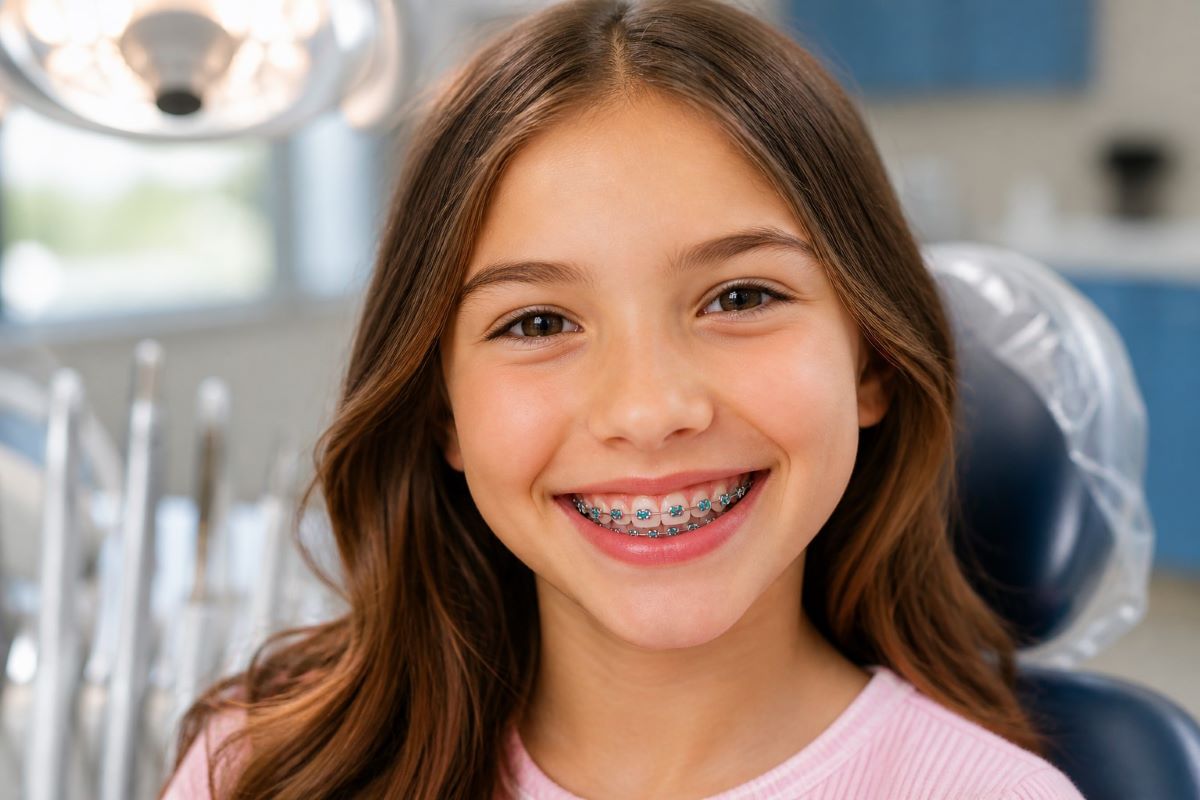
Invisalign or Braces for Teenagers?
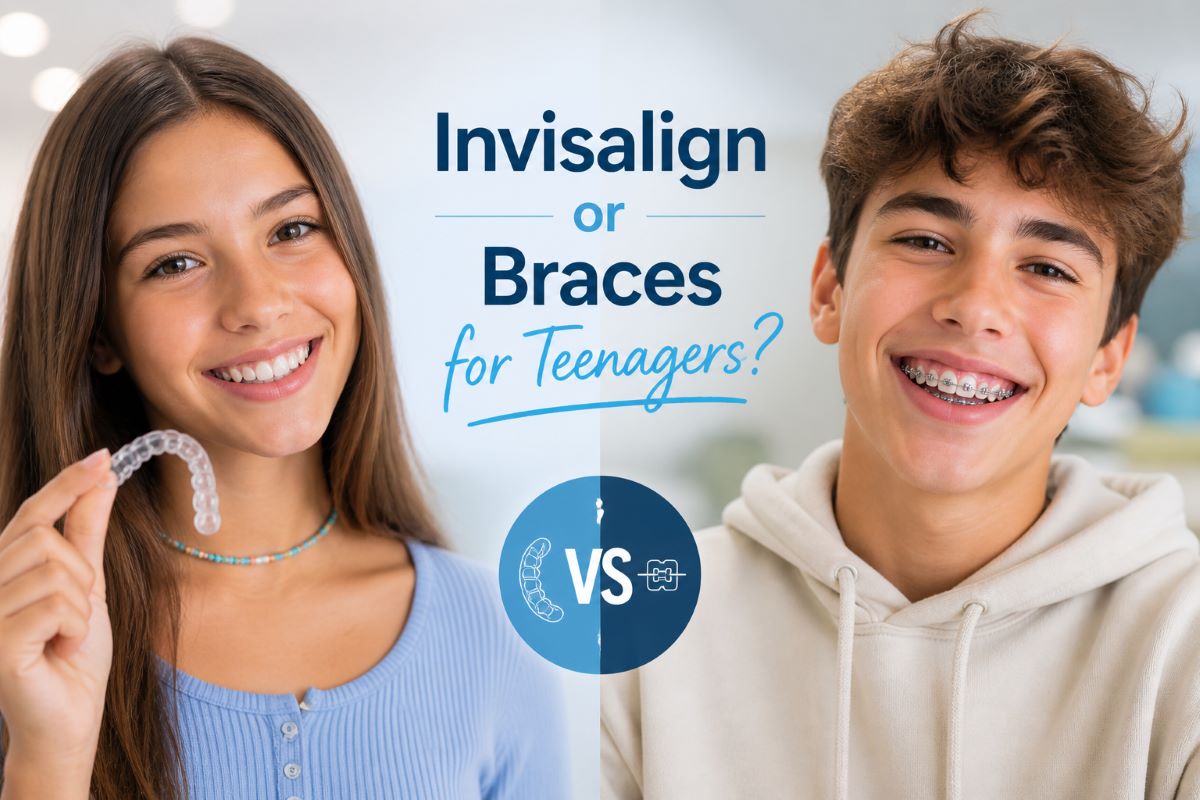
Teenagers present a unique challenge. Invisalign vs metal braces for teens comes down to responsibility. Invisalign offers “Invisalign Teen,” which includes blue compliance indicators that fade with wear, helping parents and dentists monitor usage. If a teen plays contact sports or a wind instrument, aligners are drastically safer and more comfortable. However, if the teen is prone to losing items, fixed braces are the safer clinical route.
Clear Aligners vs Braces for Adults
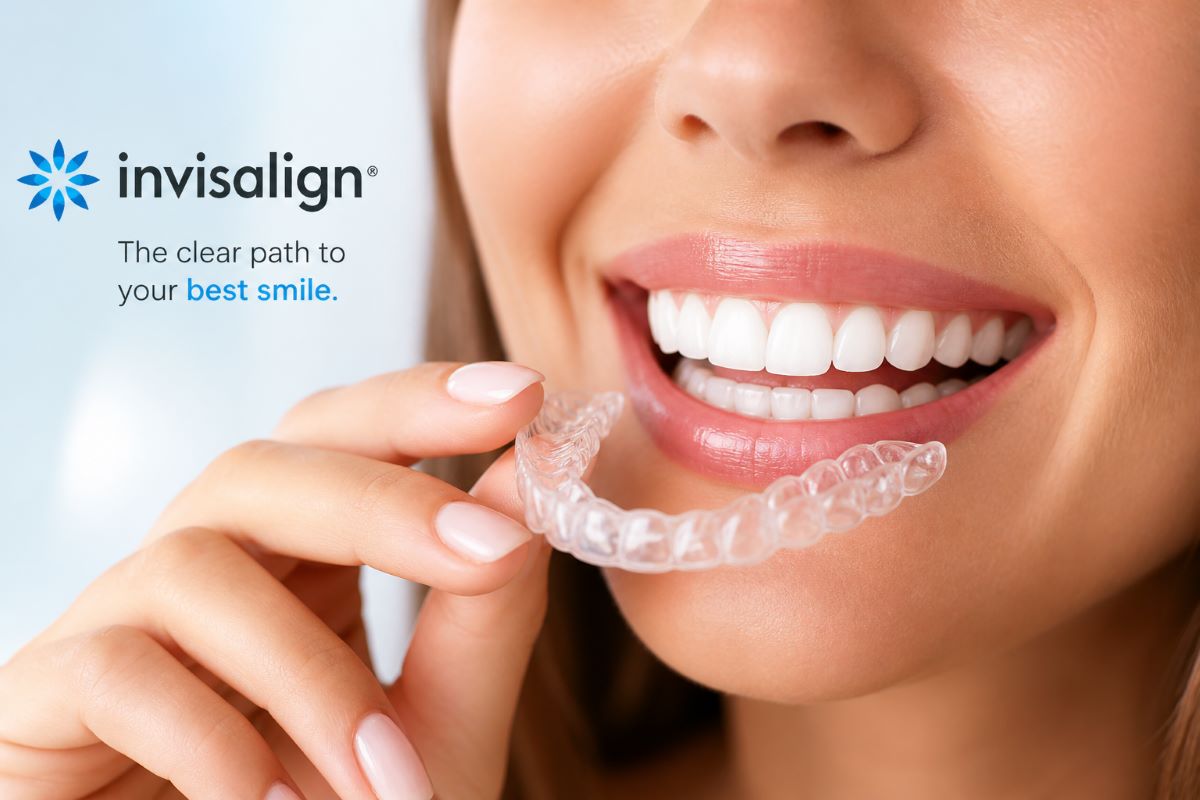
For adult patients, aesthetics and professional appearance usually drive the decision. The vast majority of adults prefer invisalign clear aligners because they are virtually invisible and fit seamlessly into professional lifestyles.
Is Invisalign Less Harmful or Painful?
Orthodontic movement inherently involves a localized inflammatory response in the periodontal ligament, meaning both methods will cause some discomfort, usually peaking 24 to 48 hours after an adjustment or a new tray.
However, clinical evidence suggests significant differences in localized trauma:
Comparing in Terms of Maintenance, Appearance, and Comfort
When researching invisalign in Lodge Causeway, daily lifestyle factors are a massive consideration.
Appearance:
Invisalign wins the aesthetic category definitively. The trays are transparent and custom-fitted to the gingival margin. Metal braces, even with ceramic (clear) brackets, remain highly visible due to the archwire.
Maintenance:
With traditional braces, patients must adhere to strict dietary restrictions—no hard, sticky, or chewy foods (like chewing gum, popcorn, or hard candies) that could break a bracket. Furthermore, flossing requires specialized threaders.
Diet:
With Invisalign, there are zero dietary restrictions. You simply remove the trays to eat, drink anything other than water, and perform your normal brushing and flossing routine before snapping them back in.
Comfort:
While both cause pressure, Invisalign’s smooth plastic is universally rated by patients as more comfortable against the oral mucosa than metal hardware.
While both cause pressure, Invisalign’s smooth plastic is universally rated by patients as more comfortable against the oral mucosa than metal hardware.
The Overall Comparison Table: Invisalign vs Braces Pros and Cons
To summarize the invisalign vs braces pros and cons, review this clinical comparison chart:
| Feature | Invisalign | Metal Braces |
|---|---|---|
| Visibility | Virtually invisible. | Highly visible |
| Removability | Removable | Fixed to the teeth |
| Dietary Limits | None. | Strict limits |
| Hygiene | Easy | Difficult |
| Comfort | Smooth plastic | can cause cheek ulcers. |
| Compliance | Requires discipline | Zero compliance |
| Complex Cases | mild/moderate issues. | Good for severe malocclusions. |
Begin Your Orthodontic Journey Today
Choosing the right orthodontic pathway is a collaborative process between you and your clinician. Whether you are familiar with the invisalign process at Olivers Battery or are looking for premier care right here in Bristol, we are here to guide you.
Don’t let uncertainty hold you back from the smile you deserve. Contact Lodge Causeway Dental, your trusted invisalign provider in Bristol, to schedule your Free invisalign consultation. Our expert team will utilize advanced 3D imaging to show you your potential results and help you decide once and for all: invisalign or braces?

Address:
Lodge Causeway Dental Centre, 352 – 354 Lodge Causeway Fishponds, Bristol BS16 3PL
Tel:
0117 9586 878
Email:
info@lodgecausewaydentalcentre.com
Opening Times:
Mon – Fri: 8am – 5pm
Parking:
Plenty of onsite parking in front of the practice
Nearest railway station:
Church Road, Barton Hill – 2.3 miles (3.7km)