
Invisalign vs Braces in Bristol
Invisalign vs Metal Braces in Bristol: Which Is Right for You?
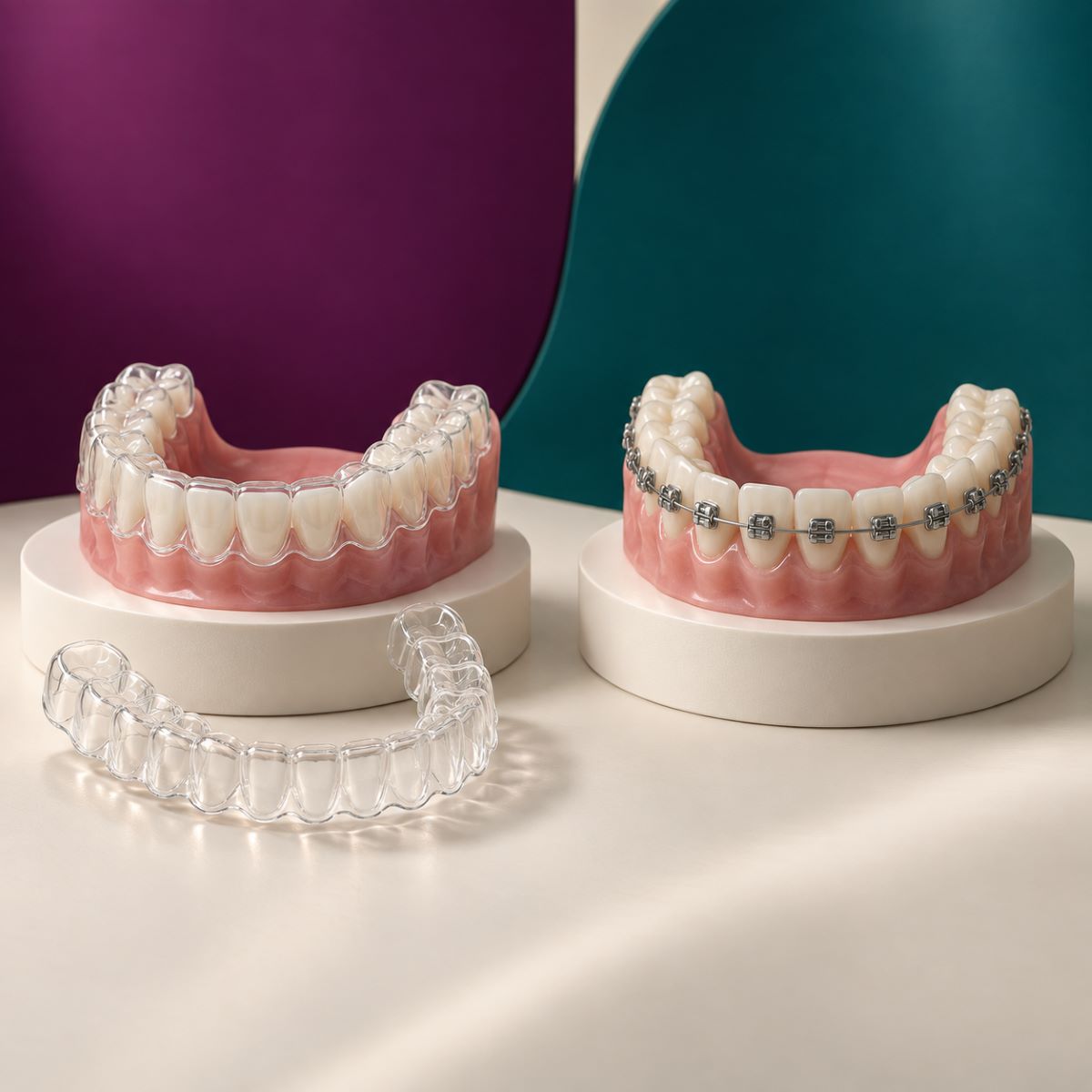
When patients visit Lodge Causeway Dental Centre in Fishponds, one of the most common orthodontic questions is: Invisalign or braces?
Both Invisalign clear aligners and traditional metal braces can straighten teeth and address selected bite problems, but they achieve tooth movement in different ways. The most suitable option depends on factors such as your case complexity, bite, lifestyle, treatment goals and ability to wear removable aligners consistently.
Neither option is automatically right for everyone. Invisalign offers removable, discreet aligners, while metal braces provide a fixed orthodontic system. A clinical assessment is needed to determine which approach suits your teeth and bite.
Understanding your teeth-straightening options
Introducing Invisalign and Metal Braces for Teeth Straightening
Invisalign clear aligners and traditional metal braces are both established methods of moving teeth into improved positions, but they work in different ways and have different day-to-day requirements. Understanding those differences is the first step when comparing Invisalign vs braces in Bristol.
Invisalign Clear Aligners
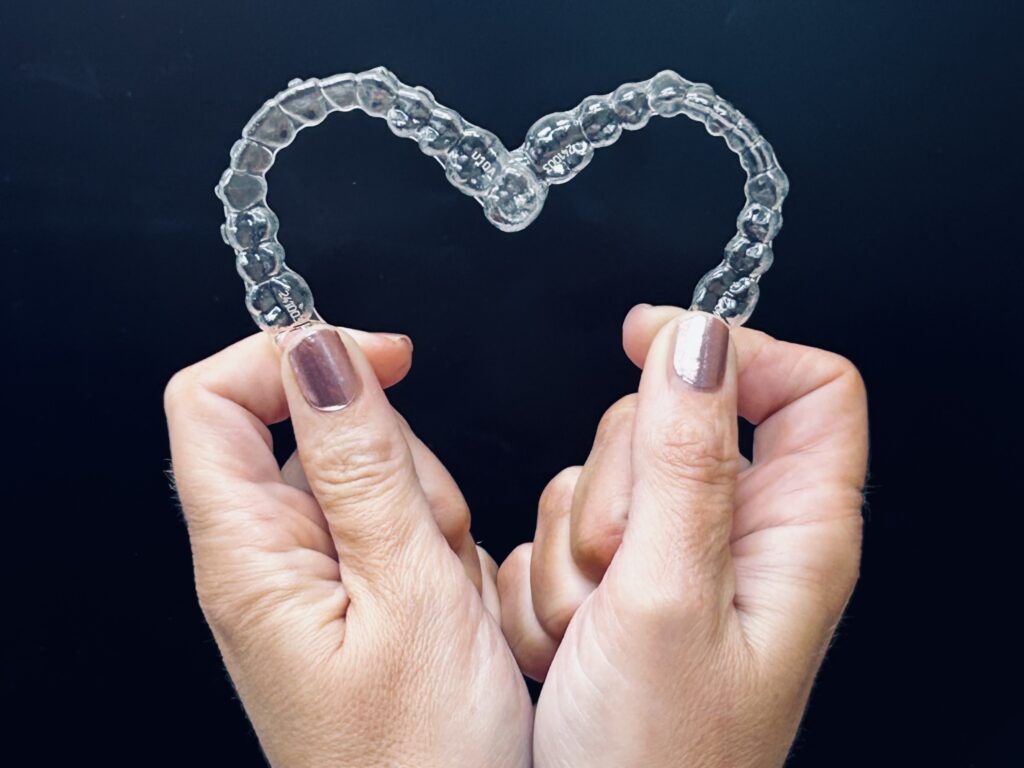
Invisalign treatment uses a planned sequence of custom-made clear aligners. Each aligner applies controlled pressure to selected teeth, gradually guiding them towards their planned positions.
- How teeth move
- A sequence of aligners applies staged, controlled orthodontic forces.
- Daily wear
- Usually around 20–22 hours per day, according to your treatment plan.
- Day-to-day
- Removable for eating, drinking and cleaning your teeth.
Traditional Metal Braces
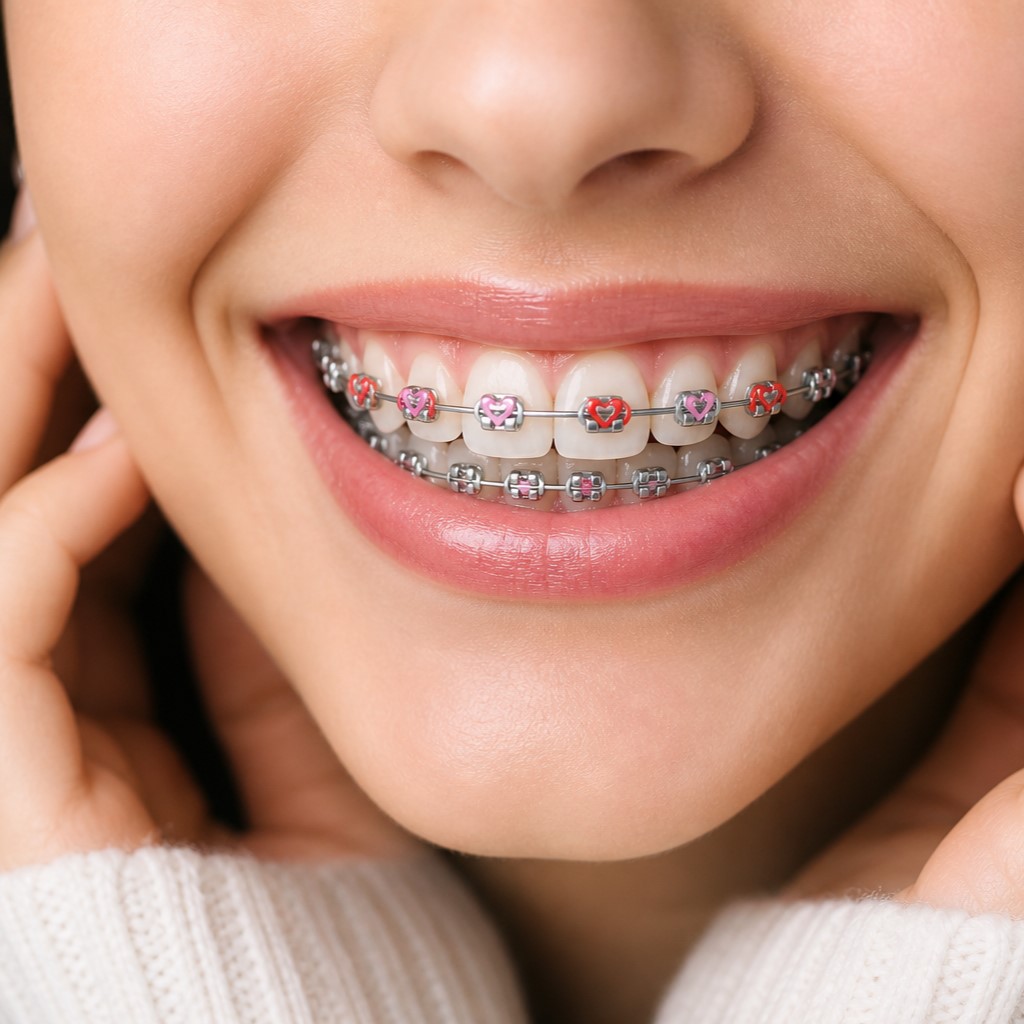
Metal braces use brackets bonded to the teeth and connected by an orthodontic archwire. The brace system applies controlled forces that progressively move the teeth as treatment advances.
- How teeth move
- Brackets and an archwire deliver continuous controlled orthodontic forces.
- Appliance type
- Fixed to the teeth throughout active treatment and adjusted during reviews.
- Day-to-day
- Requires careful cleaning and some adjustments to eating habits.
There is no single answer for every patient. This guide compares Invisalign vs braces results, treatment time, cost, comfort, appearance and lifestyle to help you understand the differences before a clinical assessment.
Invisalign vs braces cost in Bristol
Invisalign vs Metal Braces Cost: Which Is More Cost-Effective?
When comparing Invisalign aligners vs braces costs, there is no single cheaper option for every patient. The final cost depends largely on the complexity of your teeth and bite, the amount of movement required and the overall treatment plan.
For some mild or moderate cases, Invisalign and fixed braces may be priced at a similar level. More complex orthodontic treatment may require a different approach, duration and overall cost.
Traditional Metal Braces Costs
Fixed braces can be a practical option for cases requiring more complex tooth movements because the appliance remains in place throughout treatment.
- Treatment complexity
- Major factor
- Appliance
- Fixed
- Treatment duration
- Varies by case
Invisalign Aligners Costs
Invisalign pricing is influenced by the amount of tooth movement required and the treatment plan. Suitable shorter or less complex cases may require fewer stages of aligner treatment.
- Treatment complexity
- Major factor
- Appliance
- Removable aligners
- Number of stages
- Case dependent
Invisalign vs braces treatment time
Is Invisalign Faster Than Braces for Teeth Straightening?
Treatment time is important, but neither Invisalign nor fixed braces is automatically the faster option for every patient. The duration of teeth straightening depends on your starting tooth positions, bite, complexity of movement, treatment goals and how closely the treatment plan is followed.
For mild-to-moderate crowding, research suggests overall treatment duration can be similar with clear aligners and fixed appliances. More complex movements may alter which system is the more efficient clinical option.
Traditional Braces Treatment Duration
Metal braces remain attached throughout treatment, so tooth movement does not depend on remembering to wear the appliance. Fixed appliances can also provide useful control when treatment involves more complex movements or extraction-based orthodontics.
Invisalign Treatment Duration
Invisalign uses a digitally planned series of aligners that move selected teeth progressively. Suitable cases can take from several months to around 18 months, although your actual timeline depends on the complexity of treatment and your individual response.
Clinical effectiveness
Invisalign vs Braces Results: How Do They Compare?
Both systems can produce effective orthodontic results when they are used for an appropriate case. The important difference is not simply which appliance is “better”, but how predictable each system is for the particular tooth movements your treatment requires.
| Clinical Factor | Invisalign Clear Aligners | Metal Braces |
|---|---|---|
| Mild–Moderate Crowding | Well suited Effective in appropriately selected cases. | Well suited Established option with predictable tooth control. |
| Rotation & Extrusion | Case-dependent Some rotational and vertical movements can be less predictable and may require attachments or refinements. | Greater control Fixed appliances can provide strong mechanical control for difficult rotations and extrusion. |
| Dental Arch Expansion | Suitable in selected cases Can produce planned dentoalveolar expansion, particularly in mild-to-moderate cases. | Suitable Fixed appliances can also coordinate and expand the dental arch. |
| Overbite / Underbite | Depends on severity Aligners may be combined with attachments or elastics for selected bite corrections. | Depends on severity Braces may be combined with elastics or other appliances where additional bite correction is required. |
| Complex / Extraction Cases | More case-selective Complex treatment may require additional techniques or a different orthodontic approach. | Often greater control Fixed appliances may offer advantages where substantial bodily tooth movement or extraction-space control is required. |
For many adults with mild-to-moderate alignment concerns, clear aligners and braces can both produce excellent results. Your teeth, bite and required movements determine which approach is more appropriate—not appearance alone.
Invisalign vs braces longevity
Do Metal Braces Last Longer Than Invisalign?
No orthodontic appliance makes straight teeth permanently stable on its own. Whether your teeth were moved with Invisalign clear aligners or traditional metal braces, there is always some potential for them to shift after active treatment has finished.
After either Invisalign or fixed braces, retainers help hold your teeth in their corrected positions while the surrounding bone and tissues adapt.
Why Can Teeth Move After Invisalign or Braces?
Orthodontic treatment changes the position of teeth within the jawbone. Once active treatment ends, the tissues supporting the teeth continue adapting, and teeth also have a natural tendency to change position throughout life. This movement back towards a previous position is known as orthodontic relapse.
Retainers Help Protect Your New Tooth Positions
Retainers are an essential part of orthodontic treatment. Your dentist will advise you how and when to wear them, and long-term retainer use helps reduce the risk of your teeth moving again.
Invisalign vs braces by age
Invisalign vs Braces for Children, Teenagers & Adults
Choosing between Invisalign and braces at different ages is not simply about how old someone is. Dental development, the type of orthodontic problem, lifestyle, treatment goals and the ability to follow treatment instructions all influence which option may be most appropriate.
The right appliance is the one that can predictably achieve the required tooth and bite movements while fitting the patient’s stage of dental development and ability to manage treatment.
Invisalign or Braces for Kids?
Orthodontic treatment in younger children may be used to guide jaw or arch development, create space for incoming permanent teeth or address selected bite problems while the mouth is still developing.
Depending on the problem, treatment may involve fixed appliances, removable appliances, expanders or clear-aligner systems designed for selected growing children.
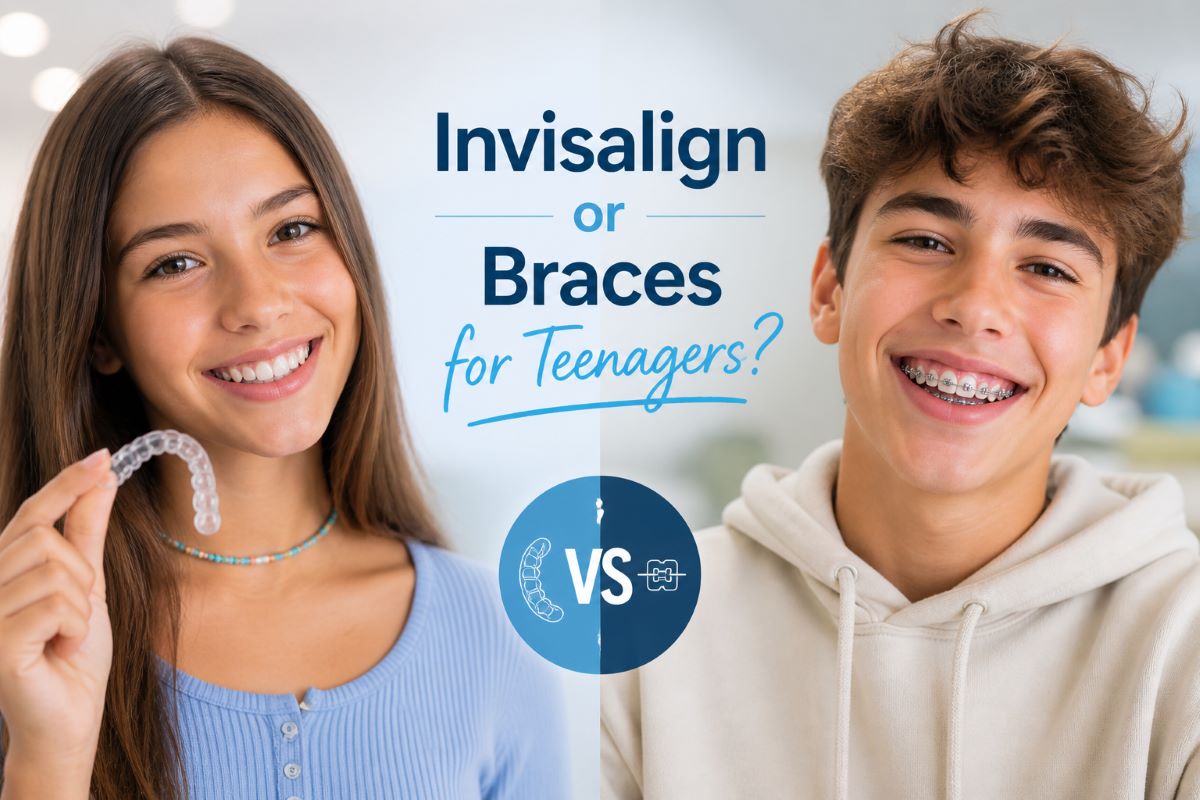
Invisalign or Braces for Teenagers?
For teenagers, both clear aligners and fixed braces may be suitable. The decision often depends on the required tooth movements and whether the teenager can consistently manage a removable appliance.
Clear aligners require responsibility because they can be removed. Fixed braces remove the daily wear-time decision but require careful cleaning and protection during sport.
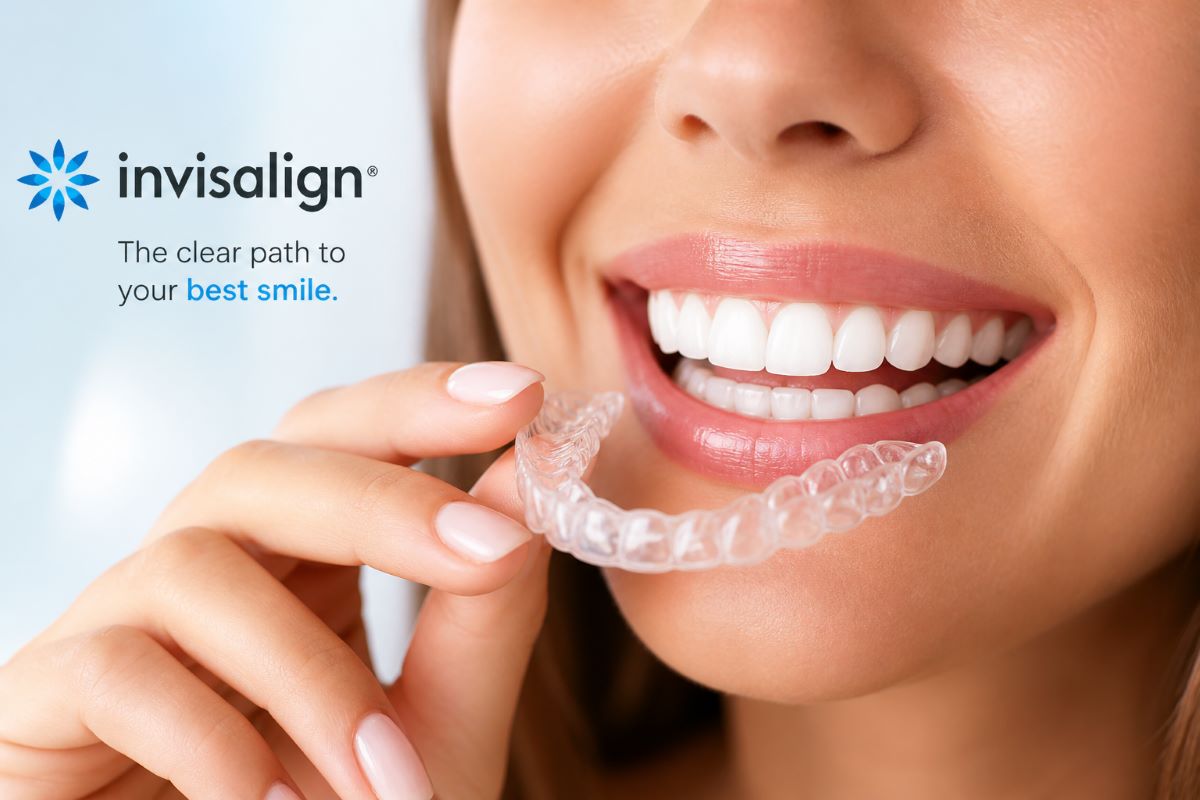
Clear Aligners vs Braces for Adults
Adults often place greater importance on appearance, work, social commitments and the ability to remove an appliance for eating and cleaning. These lifestyle factors can make Invisalign clear aligners attractive to suitable patients.
Adult patients may prefer clear aligners aesthetically, but the most appropriate appliance still depends on the movements required, oral health and bite.
Invisalign vs braces comfort & oral health
Is Invisalign Less Painful or Harmful Than Braces?
Both Invisalign clear aligners and traditional braces move teeth by applying controlled orthodontic forces, so some temporary pressure or tenderness is normal with either treatment. However, the two appliances differ in how they affect comfort, oral hygiene and surrounding dental tissues.
Research suggests aligners can cause less discomfort during parts of the early treatment period and make daily cleaning easier because they are removable. That does not mean Invisalign is risk-free: excellent oral hygiene and appropriate clinical monitoring remain important throughout treatment.
Soft-Tissue Comfort
Both systems can feel tender after treatment begins or following an adjustment. Fixed brackets and archwires can also rub against the cheeks or lips, while clear aligners have a smoother external surface.
Aligners do not have projecting brackets or archwires, although aligner edges and attachments can still occasionally irritate the mouth.
Brackets and wires can sometimes cause rubbing, soreness or small ulcers, particularly while the mouth is adapting.
Plaque & White-Spot Lesions
Fixed brackets create extra surfaces around which plaque can collect, making brushing and interdental cleaning more demanding. Poor plaque control can contribute to enamel demineralisation and white-spot lesions.
Patients can brush and floss without brackets or wires in the way, which may make plaque control easier.
Thorough cleaning around brackets and beneath the archwire is important to help protect enamel and gums.
Clear aligners do not eliminate the risk of decay or white spots. Teeth should be cleaned before aligners are replaced after meals.
Root Resorption
Orthodontically induced root resorption is a recognised potential effect of tooth movement with both clear aligners and fixed braces. The amount varies between individuals and depends on several clinical and biological factors.
Comparative studies suggest clear aligners may be associated with slightly less apical root resorption than fixed appliances in comparable cases. The observed difference appears relatively small, so appliance choice should not be based on this factor alone.
- Individual biology matters
- Tooth movement and treatment complexity matter
- Appropriate monitoring remains important
Invisalign may offer advantages for early comfort and day-to-day oral hygiene, but the most appropriate orthodontic system still depends on your teeth, bite and required movements.
Everyday life with Invisalign vs braces
Invisalign vs Braces: Appearance, Maintenance, Diet & Comfort
When comparing Invisalign and metal braces in Bristol, the differences extend beyond how teeth are moved. Appearance, eating, oral hygiene and day-to-day comfort can all influence which treatment better fits your lifestyle.
Clear aligners are removable and less visually noticeable, while fixed braces remain attached throughout treatment and require more adaptation around eating and cleaning. Clinical suitability should still come before lifestyle preference.
Appearance
Invisalign aligners are made from clear material and closely fit over the teeth, making them substantially less noticeable than conventional metal braces.
Tooth-coloured attachments may still be visible on some teeth.Traditional braces use brackets and an archwire that remain visible throughout treatment. Ceramic brackets can be less conspicuous but still use a fixed appliance system.
Maintenance & Oral Hygiene
Because the aligners can be taken out, you can brush and floss without brackets or wires obstructing access to your teeth.
The aligners themselves also need regular cleaning.Brushing around brackets and underneath the archwire takes extra care. Interdental brushes or other cleaning aids may be recommended to reach around the appliance.
Diet
Remove your aligners before eating, so you can generally continue eating your usual foods without worrying about breaking brackets or wires.
Aligners should normally also be removed for drinks other than plain water.Hard, sticky or very chewy foods can damage brackets or wires. Foods such as crusty bread, apples or carrots may need to be cut into smaller pieces.
Comfort
Clear aligners have no projecting brackets or archwires. Evidence suggests some patients experience less discomfort during parts of the early treatment period.
Pressure and temporary tenderness are still normal as teeth move.Brackets and wires can initially rub the inside of the mouth and teeth may feel sore after adjustments, particularly while adapting to the appliance.
Invisalign generally provides more flexibility for appearance, eating and oral hygiene, while fixed braces remove the need to remember daily aligner wear. The right balance depends on your treatment needs and lifestyle.
Invisalign vs braces at a glance
Invisalign vs Braces Pros and Cons: Overall Comparison
The table below brings together the main differences between Invisalign clear aligners and traditional metal braces, including appearance, removability, diet, cleaning, comfort, compliance and suitability for different orthodontic needs.
Invisalign often provides greater flexibility and discretion, while fixed braces can offer advantages where more complex or highly controlled tooth movements are required.
| Feature | Invisalign Clear aligners | Metal Braces Fixed appliance |
|---|---|---|
| Visibility | Less noticeable Clear trays fit closely over the teeth, although attachments may still be visible. | More noticeable Metal brackets and the archwire remain visible throughout treatment. |
| Removability | Removable Removed for eating, most drinks, brushing and flossing. | Fixed Brackets remain bonded to the teeth throughout active treatment. |
| Eating & Diet | Greater flexibility No appliance-related food restrictions while the aligners are removed for meals. | Extra care needed Hard, sticky and very chewy foods can damage brackets or wires. |
| Oral Hygiene | Easier access Aligners can be removed so teeth can be brushed and flossed normally. The trays also require cleaning. | More detailed routine Brushing and interdental cleaning must be carried out carefully around brackets and wires. |
| Comfort | Smooth aligners No projecting brackets or archwires, although pressure and temporary tenderness are still expected. | Fixed hardware Brackets and wires can occasionally rub the cheeks or lips, particularly during adaptation. |
| Patient Compliance | Wear time is essential Aligners normally need to be worn for approximately 20–22 hours per day. | No wear-time decision The appliance stays in place, although good cleaning, attendance and use of prescribed elastics still require cooperation. |
| Complex Tooth Movement | Case-dependent Can treat a wide range of orthodontic problems, but some complex movements are less predictable and may require attachments, elastics or refinements. | Greater fixed control Fixed appliances can provide advantages for some difficult rotations, vertical movements and complex treatment mechanics. |
| Daily Lifestyle | More flexible Removability and discreet appearance can suit work, meals and social situations. | More adaptation Always present, but there is no need to remember to replace the appliance after eating. |
Invisalign can be particularly attractive if you value a discreet, removable treatment and can consistently manage the required wear time. Fixed braces may be preferable where your treatment requires greater mechanical control or where wearing removable aligners consistently could be difficult. Your teeth and bite ultimately determine suitability.

Address:
Lodge Causeway Dental Centre, 352 – 354 Lodge Causeway Fishponds, Bristol BS16 3PL
Tel:
0117 9586 878
Email:
info@lodgecausewaydentalcentre.com
Opening Times:
Mon – Fri: 8am – 5pm
Parking:
Plenty of onsite parking in front of the practice
Nearest railway station:
Church Road, Barton Hill – 2.3 miles (3.7km)